Most organizations treat SEO like a utility bill—hand it to someone else and keep paying until you can’t justify it anymore.
Learning Links took a different approach. By enlisting Inkwell to train their in-house team rather than manage their SEO for them, they built something more valuable than rankings; they built the knowledge and confidence to own their content strategy themselves.
This is the story of how that happened.
About Learning Links
Learning Links is a not-for-profit organization that has been supporting children with learning difficulties and their families since 1972.
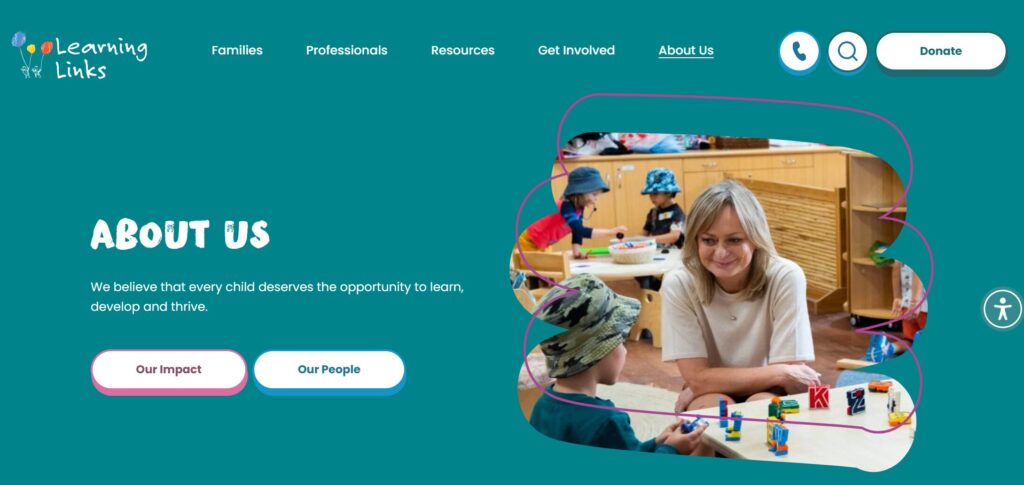
They run a content-rich website covering everything from ADHD and dyscalculia to tutoring services and family support programs—topics that are both deeply important and highly competitive in search.
They came to Inkwell in late 2021 with a talented marketing team and strong writers already in place. What they were missing was a clear SEO framework to tie it all together.
“Learning Links’ content spans many topics and services for different audiences, most of which are competitive in search,” says Tamar Kaplan, Content Marketing and Website Lead at Learning Links. “None of our existing content was written with SEO in mind, and it was overwhelming to know where to begin. Liam helped give us focus and direction.”
The Approach: Education over dependency
From the start, the goal wasn’t to hand Learning Links an SEO strategy and walk away.
It was to make sure their team understood it well enough to own it themselves.
The engagement was intentionally flexible. Learning Links could bring Inkwell in when they needed guidance and step back when they didn’t. There was no bloated and endless retainer, because part of the goal was to help Learning Links conserve their resources while building their SEO independence.
We worked in three phases.
Phase 1: Building the foundation
Before anything went live, we needed to understand exactly what Learning Links was working with. This phase was about education and diagnosis, and mirrored the early stages of any strong content strategy:
- Full website audit, reviewed together as a team
- Site structure and URL structure assessment
- Keyword research and mapping keywords to existing pages
- Training on Google Search Console and Google Analytics for ongoing monitoring
The difference was that instead of doing all these things for Learning Links, Inkwell showed them how it was done. Learning Links got the best of both world—the years of professional SEO and content expertise that Inkwell offers, and detailed guidance on how to take those learnings and put them to work.
Phase 2: Putting it into practice
Once the foundation was in place, we shifted to execution. Liam’s role here was part editor, part coach, part accountability partner:
- Reviewed content written by their team before it went live, providing feedback on SEO and structure
- Provided feedback on technical updates made to improve the site’s functionality and search visibility
- Went through their metrics with the team regularly to make sure they were collecting the right data and reading it correctly
Liam also made sure that the Learning Links team was up to speed with all of the changes happening in SEO, particularly around AI search.
“Liam shares expertise in a way that’s really easy to understand, practical, and actually feels achievable,” says Tamar.
Phase 3: Ongoing support and guidance
As Learning Links grew more confident managing their own strategy, Inkwell’s role shifted accordingly.
Rather than regular structured sessions, Liam was available to step in as needed, answering questions, sense-checking decisions, and helping the team navigate new challenges as they arose.
When AI search began reshaping the landscape in 2024 and 2025, that included training on what it meant for their content and visibility. How to think about AI Overviews, how to create content that still gets seen, and how to adapt their existing strategy without starting from scratch.
“We’ve been kept across the latest industry changes thanks to Liam, so we’ve felt really prepared for everything AI has brought with it,” says Tamar.
The Results
The impact showed up quickly, and it compounded over time. Four years on, the numbers tell the story:
- 60% increase in top-ranking keywords
- 1,600+ organic keywords and phrases in their portfolio today
- Appearing at the top of search results for key landing pages
- Visible for high-value terms their audience is actively searching, including “ADHD in girls” (8.1K monthly searches) and “oppositional defiant disorder” (8.1K monthly searches)
“We started seeing results almost immediately after working with Inkwell,” says Tamar. “Four years on, we are appearing at the top of search results for many of our key landing pages. More than anything, we’ve gained so much knowledge and confidence that we can now manage our own content strategy with just a little check-in once in a while.”
Looking Ahead
Like most websites relying on organic traffic, Learning Links has felt the impact of Google’s AI Overviews rollout.
It’s a shift that has quietly eroded traffic across industries, regardless of how strong the underlying SEO foundation is.
This isn’t a reflection of bad SEO work, but rather evidence of how much the search landscape has changed in the last few years. Businesses like Learning Links can use their foundational knowledge to stay ahead of these changes, while exploiting new strategies to meet new search channels as they arise.
Inkwell’s Search Evolution Strategy is designed specifically for this moment—helping organizations protect and rebuild their organic visibility by focusing on the fundamentals that AI search still rewards: authoritative content, strong site structure, and a broader presence across platforms.
For a team like Learning Links, who already have the knowledge and the foundation in place, that’s a very achievable next step.